
Farm & Ranch Fencing 101: Choosing Fence for Horses, Cattle and Acreage in Middle Tennessee
A practical guide for landowners from Middle Tennessee into North Alabama who need livestock-capable fence — not just backyard privacy panels.
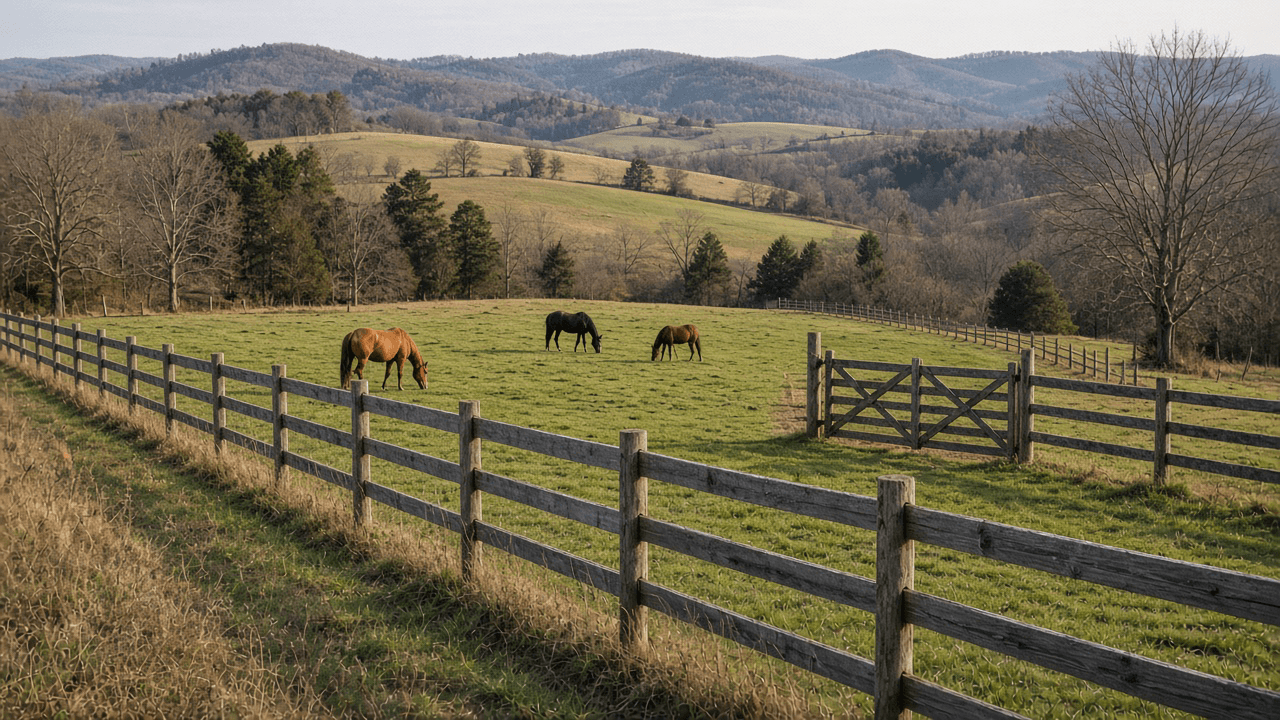
Privacy fence solves subdivision sight lines. Farm and ranch fence solves a different problem: keeping horses off the road, cattle in the correct paddock, and your liability from walking through a weak stretch of decades-old wire. Sands Fence Co. already publishes guides on privacy, pet yards, weather wear, fall install timing, barns, and outdoor living. What those posts do not cover in depth is livestock and acreage fencing — board, woven wire, high-tensile, gates, and winter timing for rural properties.
Key Takeaways
- Match fence type to animal behavior (horses ≠ cattle ≠ goats) and to your management style.
- Budget for corners, gates, terrain, and water gaps — not only “dollars per linear foot” of straight run.
- Winter and late fall can be excellent install windows: softer schedules, visible ground lines after crops/leaves, and readiness before spring pasture moves.
- Plan gates where trucks, trailers, and tractors actually travel — retrofit gates are expensive regrets.
- Pair fencing decisions with your barn and outdoor-living plans so the whole property works as one system.
Start With the Animal, Not the Catalog Photo
Horses
Horses test fence with vision, speed, and sometimes curiosity. Many horse owners prefer board fence, mesh designed for horses, or hybrids that are highly visible and reduce hoof/leg entrapment risk compared with wide-spaced field wire. Avoid setups famous for catching shoes. Visibility matters along tree lines and shade where boards can disappear visually.
Cattle
Cattle respond well to strong perimeter fence and cross-fencing for rotational grazing. Woven wire, barbed combinations where appropriate and permitted by your management preferences, and high-tensile electric systems are common tools. Pressure on gates near working pens is intense — build those zones heavier.
Mixed or small ruminants
Goats and sheep challenge fence differently (climbing, crawling). Mesh size and bottom tension matter more. If you are adding goats “just for brush,” say so up front — the fence spec changes.
No livestock yet
If you are fencing for future animals, build the perimeter to the most demanding animal you realistically expect within a few years. Upgrading later costs more than doing the line once.
Board, Woven Wire, and High-Tensile — Compared
Board fence (wood or vinyl options)
Classic look, high visibility, popular for horse frontage. Cost and maintenance (wood especially) are higher. Great where aesthetics and visibility lead.
Woven wire / field fence
Versatile for many livestock plans, often with a hot wire or top rail for visibility and pressure. Terrain and proper stretching matter; sagging woven wire is how calves find adventures.
High-tensile (often electrified)
Efficient for long runs and rotational grazing. Requires training animals to respect the fence, consistent power, grounding done correctly, and vegetation management so the fence does not short out in a Middle Tennessee summer grow-up. Not everyone’s management style — excellent for those who will maintain it.
Hybrids
Example: board frontage for the driveway view, woven or high-tensile on back acreage. Many Tennessee/Alabama farms mix systems on purpose.
Sands can help you walk the property and match material to soil, slope, and animal plan rather than selling one product as universal.
Gates, Corners, and the Expensive Little Details
Straight fence is the easy part of the estimate conversation. Real cost lives in:
- Corner assemblies and end braces
- Gates wide enough for trailers and round balers
- Lane systems to move livestock without herding across the highway frontage
- Creek and ditch crossings / flood-prone spans
- Driveway entries that still look finished from the road
- Line shifts around barns, arenas, and equipment pads
Bring a sketch of how you move hay, manure, and trailers in a normal week. Fence that ignores chore flow becomes a daily frustration.
Cost Drivers Per Acre (Without Fake Prices)
Per-acre math only works after you know perimeter shape. A long, skinny 10-acre strip needs more fence than a square 10 acres. Other drivers:
- Clearing along the fence line (tie-in with land clearing if the line is grown up)
- Rock and soil conditions for posts
- Number of gates
- Material grade and height
- Electrification components
- Tear-out of failing old fence
Ask for a scope that separates materials, labor, gates, and optional electric so you can phase work if needed: perimeter first, cross-fencing next spring.
Why Late Fall and Winter Work Well for Farm Fence
Sands’ fall-install guidance for residential fence still applies on acreage — with rural bonuses:
- Leaves are down; survey lines and old corners are easier to see
- Crop fields and pasture traffic patterns are clearer after growing season
- Crew schedules may be more open than May
- You enter spring calving/foaling and grazing season with containment ready
Frozen mud and ice storms can pause work, but waiting until April often means competing with everyone else’s spring projects.
Local Section: Middle Tennessee to North Alabama Acreage
From Columbia and surrounding Middle Tennessee communities up toward North Alabama, properties mix horse farms, cattle operations, and “rural residential” lots that still need a serious perimeter. HOA privacy rules do not apply the same way out here — animal safety and road frontage liability do.
If you are also planning a barn, read Sands’ custom barn guidance alongside this fence plan. Barn without turnout fencing, or fencing without a sensible livestock handling layout, creates expensive do-overs. Outdoor living spaces for the family can share the aesthetic of board frontage while working fence handles the back pastures — one property, two jobs.
Phone lines for Sands Fence Co. cover the region: (931) 309-1644 and (256) 509-2408.
Property Walk Checklist Before You Request a Quote
- Mark property pins if known
- Note utilities and buried lines (call 811 before posts go in)
- List animals now and animals in 3 years
- Measure trailer width you actually own
- Photo failing stretches and wet gaps
- Decide which view from the road should be “show fence”
Rotational Grazing and Cross-Fencing
If your goal is better pasture, the perimeter is only chapter one. Cross-fencing lets you rest paddocks and control grazing pressure. High-tensile electric often shines here because temporary or semi-permanent interior lines can move with the season. Design the perimeter strong enough that interior experiments do not risk a highway escape when something fails.
Water placement matters as much as wire: animals cluster at tanks and can destroy mud zones near gates. Plan lanes and heavy-use pads with the fence layout, not after the posts are set.
Insurance and Neighbor Realities
Ask your farm insurer whether they have preferred fence types for horses or cattle. Neighbor fence-line agreements on shared boundaries deserve a conversation before crews dig. A beautiful fence on the wrong side of a pin is an expensive philosophy lesson.
Phased Projects for Growing Operations
Not every landowner can fence the full perimeter in one invoice. A sane phase plan might be: (1) highway and neighbor high-risk boundaries, (2) livestock working pens and alley, (3) interior cross-fence for grazing. Write the phases so materials match — nothing worse than three incompatible gate hardware standards across five years of additions.
Build Fence That Matches How You Farm
Pretty pictures online rarely show your creek gap or your 24-foot gooseneck. Start with animals and chore flow, then pick materials.
Call Sands Fence Co. at (931) 309-1644 or (256) 509-2408 to walk your acreage and design farm or ranch fencing for Middle Tennessee and North Alabama properties. We will help you prioritize perimeter, gates, and phasing so spring turnout is ready.
Frequently Asked Questions
- How tall should horse fence be?
- Height depends on breed, temperament, and design. Many horse perimeters use heights in the common 4.5–5+ foot conversation — confirm for your animals and insurer recommendations.
- Is barbed wire okay for horses?
- Many horse owners avoid barbed wire because of injury risk. Cattle operations may still use it in places. Be explicit about species when quoting.
- Can you install in winter?
- Often yes, weather permitting. Extreme freeze-thaw or flooding can delay post setting.
- Do you remove old fence?
- Discuss tear-out in the scope. Leaving old wire in grass is a hazard for equipment and animals.
- Will electric fence work if I’m not there every day?
- It can, with good energizers, grounding, and vegetation control — but absentee properties need a maintenance plan or a different primary system.